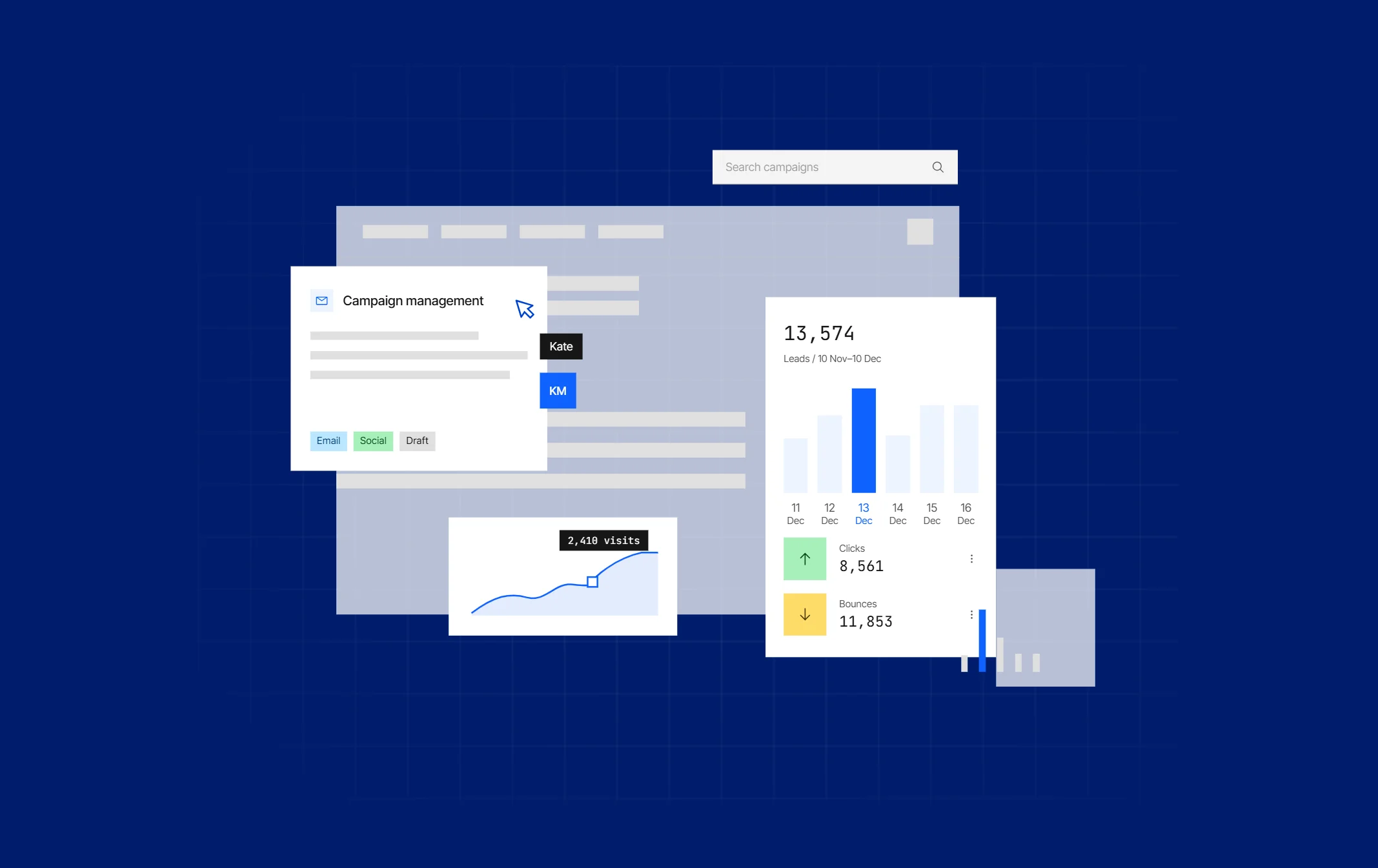
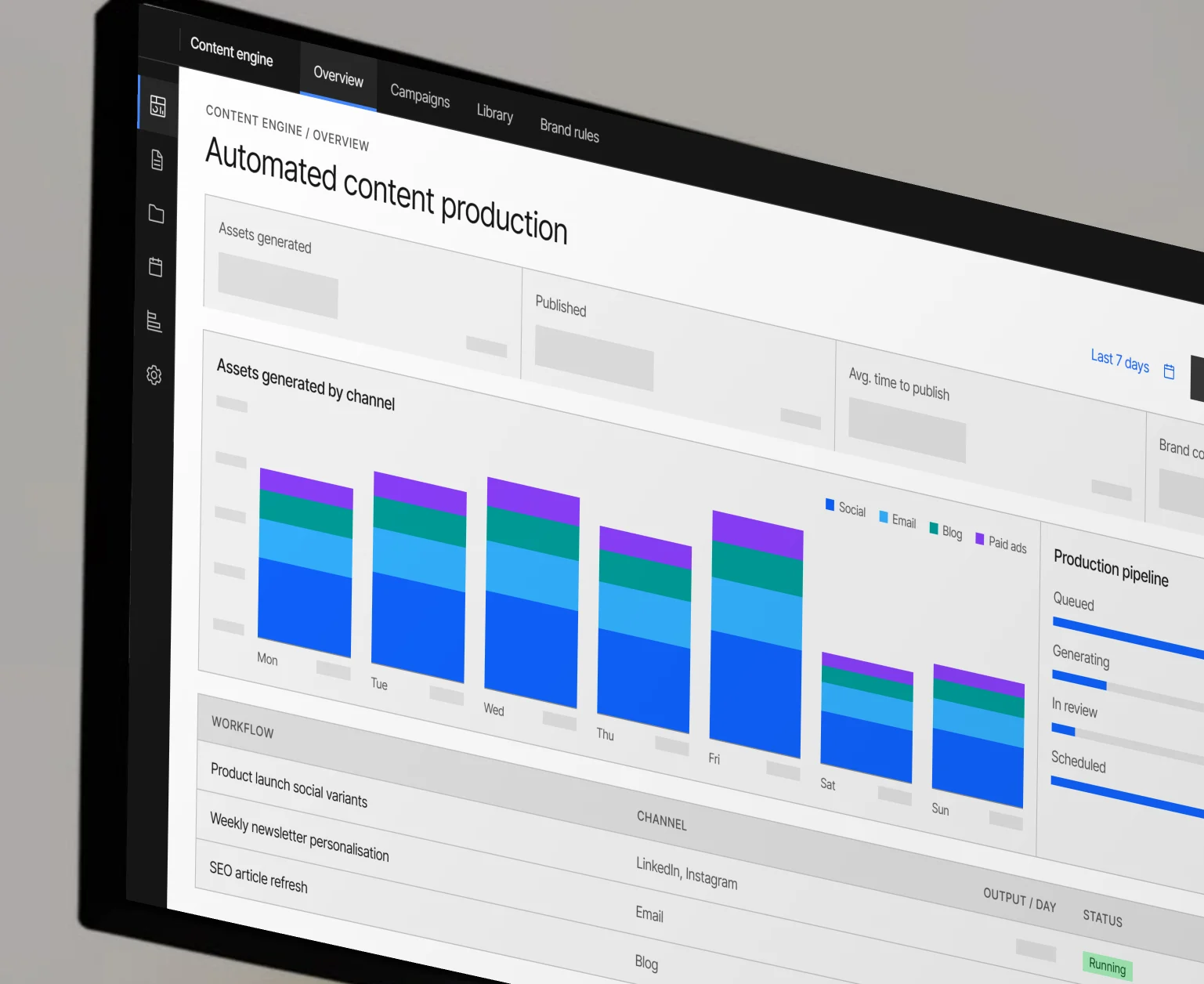
Marketing function that produces qualified demand and reports on what it closed

Brand, search, content, paid and email, measured against pipeline.

  Inside The Practice

What sits inside this practice

The full demand cycle, from the positioning through the channels that carry it.

Brand Strategy and Positioning

Search Engine Optimization

Content Marketing

Paid Advertising

Social Media Management

Email Marketing

Website Design and Optimization

Marketing Analytics and Reporting

  Where Functions Stall

Where marketing functions typically get stuck

01

Activity gets measured,
results do not

Reporting covers what was produced. Posts published, emails sent, impressions bought. None of it connects to what actually closed, so the budget conversation turns into a defense of the work.

02

The brand says one thing
and the channels say another

Positioning gets set once and then drifts. The website, the ads and the outbound each describe the company slightly differently. A buyer comparing three vendors reads that as three different companies.

03

Every channel is owned by
a different outside vendor

An agency runs paid, a freelancer writes the content, someone else owns the website. Each one reports on its own numbers against its own goals, and nobody is accountable for what the function produces as a whole. Coordinating them falls to whoever inside the company has the least room for it.

   How Capabilities Apply

How every capability applies to marketing

Clients engage one or more of these at their discretion. Sometimes an assessment and a repositioning is the whole engagement. In others, rebuilding the reporting so it connects to pipeline is all that is needed. Where a marketing team is deployed, it runs under an ISO 9001 certified quality framework with supervision and quality assurance at every stage.

One capability or all of them. Whichever way an engagement starts, the same standards govern the work.

 The Systems Layer

The systems running modern marketing operations

Platform-agnostic. Solutions are designed around your current stack. When new platforms are in scope, the same team can advise on changes to improve throughput and accuracy.

Disclaimer: All product names, logos, and brands are property of their respective owners. Use of these names, logos, and brands does not imply endorsement.

   Frequently Asked Questions

Questions marketing and revenue leaders ask

Does an engagement require outsourcing our marketing function?

No. Clients engage Cordatus for one or more of the capabilities outlined above at their discretion. Sometimes an assessment and a repositioning is all that is required. When clients need to augment their team with experienced marketing professionals, managed services can be applied.

They become the best source of information on how demand actually gets created today. They know which channels have been carrying the load and which have never been measured properly, and they help establish the baseline. As the process and the reporting get built, that team spends less of its week on production work and more of it on the work that calls for their judgment.

Every engagement is supervised by senior marketing professionals who are accountable for the outcome. The people handling day to day execution are trained on the documented process and work inside an ISO 9001 certified quality framework. Where a client’s situation calls for a specific platform certification or channel specialty, a qualified practitioner is brought onto the engagement.

No. An agency is hired to produce campaigns. This practice assesses how demand gets created, redesigns the process behind it, and reports against a baseline. The process exists whether or not a Cordatus team is the one executing on it.

No. Cordatus does not require any changes to client tech stacks. There are no reseller agreements and no preferred platforms. Where a migration is genuinely the right move, that case gets made with numbers behind it.

For research, drafting and analysis inside a defined review step. Everything that reaches a buyer has a person accountable for it.

Against an agreed baseline set at the start of the engagement. Reporting is built on the measures that connect to pipeline.

Yes. Typically inside a value creation window, and frequently involving consolidation of marketing across newly combined entities carrying different brands, websites and channel vendors.

With an assessment. It maps the current channels, the positioning and the funnel, and produces a baseline and a sequenced plan before anything changes.

Start with an assessment

A consultation looks at how demand gets created today and where the funnel leaks. It produces a read on what is worth changing first.